You want information for
Vitrometer – Glass thickness
If you would like a quotation or have any questions about the product, please contact us:
- by email at info@saugnac-gauges.com
- by telephone on +33 9 62 07 18 68


 Made in France
 1 mmResolution
 Glass and air gapSingle and double glazing
 Direct readingIn the reflection on the glass
 ManualCost-effective solution
| Resolution | 1 mm |
|---|---|
| Type of measurement | Thickness of single glazing and air gap of double glazing |
| Measuring range | Single glazing thickness from 4 mm to 22 mm Double glazing air gap from 6 mm to 24 mm |
| Weight | 52 g |
| Dimensions | 16 cm x 7.5 cm x 1 cm |
The principle of the manual vitrometer is simple, and it is a much more cost-effective solution than an electronic version.
Highly effective, the Saugnac manual vitrometer measures with great precision:
The tool is a small plastic rule, graduated on both sides. The front side of the vitrometer is used to measure the thickness of single glazing and also works for laminated glazing. The back side, marked “DOUBLE VITRAGE” (double glazing), shows the thickness of the air gap in double glazing.
Please note: the markings on the vitrometer are in French only. The instruction leaflet supplied is in English.
The manual vitrometer works on the optical principles of refraction and reflection of light. This phenomenon occurs when a beam of light meets a surface. The reading is therefore taken directly in the reflection on the glass.
Here is how to use a vitrometer correctly (positions, reading conditions, etc.) to measure the thickness of single glazing and double glazing.
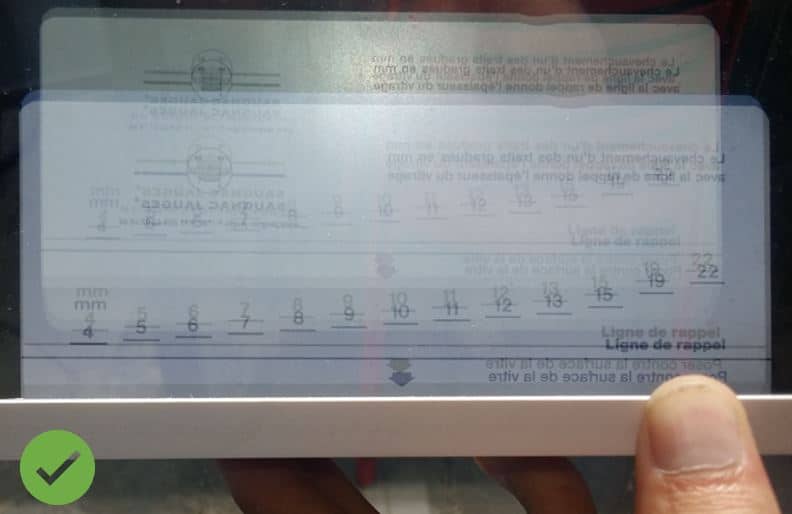
To do this, the “front” side faces upwards. For optimal positioning, the vitrometer should be inclined at 45°.

Your line of sight must be in line with the top surface of the Saugnac vitrometer. The position is correct when you cannot see the surface of the vitrometer, only its edge.
To make reading easier, do not read on glazing in full sun but on a shaded part.
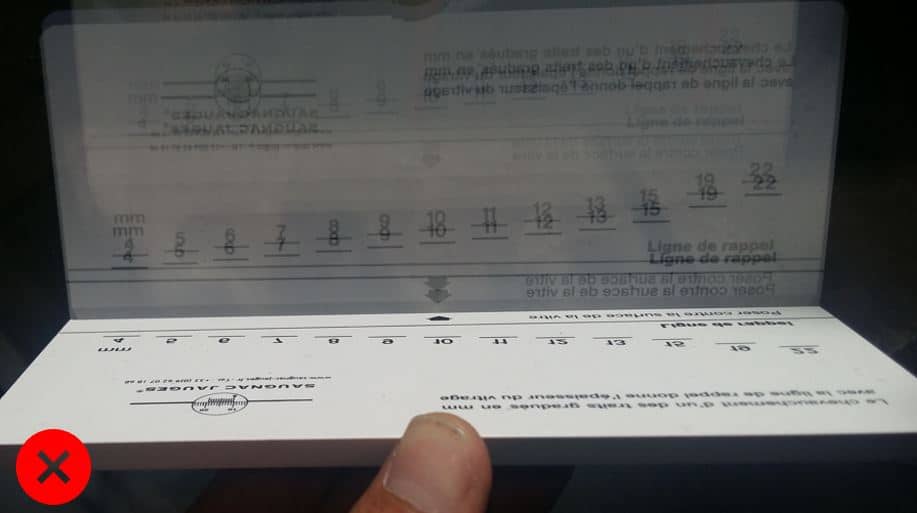
Incorrect position (the surface of the vitrometer is visible)
Correct position (only the edge of the vitrometer is visible)
The glass thickness is measured in mm. The reading is taken in the reflection on the glass, where one of the mm graduation marks lines up with the second extended line.
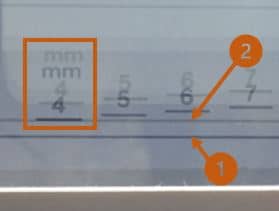
 : 1st extended line
 : 2nd extended line
The glass thickness in the example above is therefore 4 mm.
To measure double glazing, the manual vitrometer is placed with the “back” side facing upwards. The angle is the same as for single glazing: 45°.
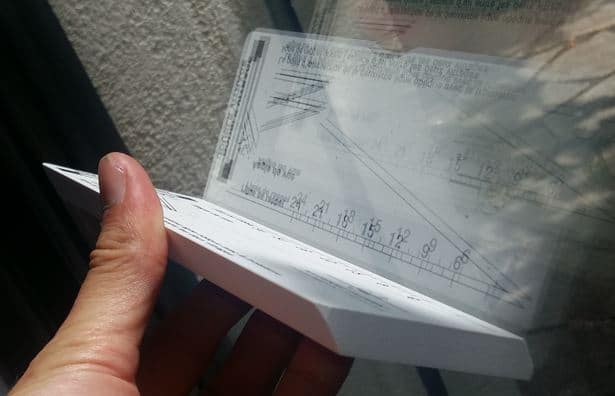
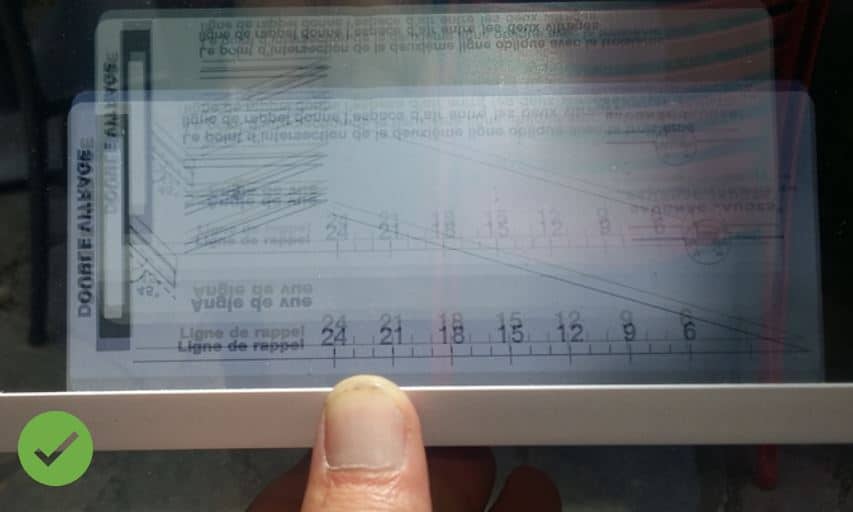
To measure the air gap of double glazing, your line of sight must again be in line with the top surface of the vitrometer.
Careless positioning here would lead to a reading error of several millimetres on the air gap. We recommend practising on double glazing whose air gap thickness you already know. This will help you get used to the tool and make sure you have mastered the ideal position of the manual vitrometer.
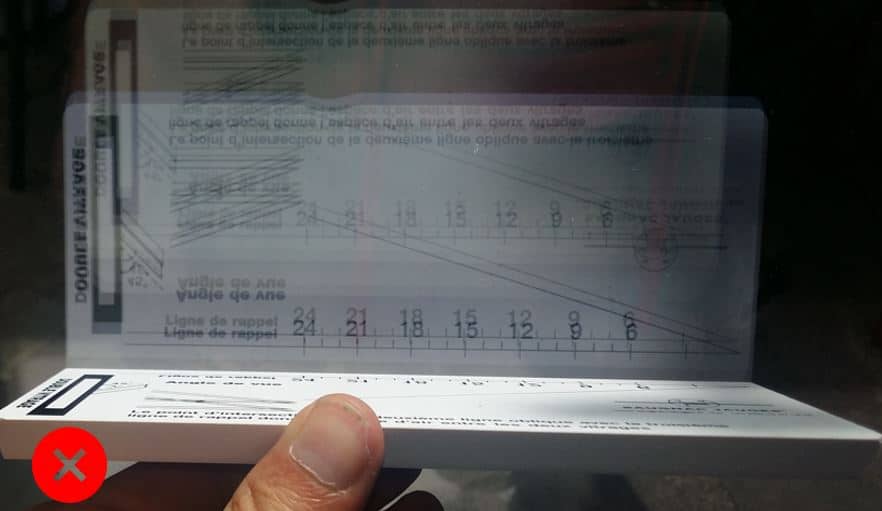
Incorrect position (part of the vitrometer is visible)
Correct position (only the edge of the vitrometer is visible)
The air gap of double glazing is read in the reflection on the glass, where the 2nd oblique line crosses the 3rd extended line.
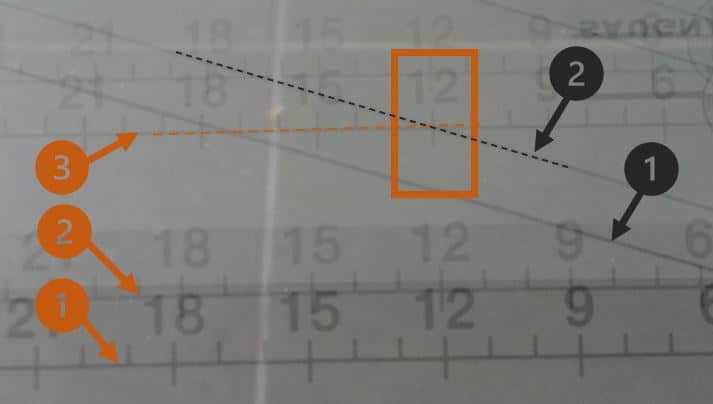
: 1st extended line: 2nd extended line : 3rd extended line
 : 1st oblique line
 : 2nd oblique line
The air gap of the double glazing in the example above is therefore 12 mm.
The total thickness of double glazing is worked out in two steps. First use the first side to measure the thickness of the glass (example: 4 mm), then the 2nd side to measure the air gap (example: 12 mm). This gives the total thickness of the double glazing: 4/12/4.
If the two panes of the double glazing have different thicknesses (example 4/12/6), you need to measure the glass thickness on each side.

Measures crack width from 0.05 to 40 mm, by eye or with augmented reality

Measures the space between two elements