
Bridge monitoring: a strategic issue for safety, prevention and asset budgets
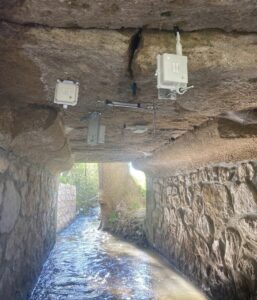
Bridges are among the most critical assets in any transport network — and across most of the world, they are ageing together. A large share of the existing stock was built between the 1950s and the 1980s, during a period of rapid infrastructure expansion. These structures were designed for traffic volumes and axle loads far lighter than those they carry today, and many are now approaching the end of their design life at the same time.
Whether they fall under national agencies, regional authorities or local councils, these structures are essential links in the transport network. Their overall condition is nevertheless a growing concern, given the damage increasingly reported on ageing stock: cracking, settlement, deformation.
The current state of road bridges
Whether it is a crack observed on a small local bridge or deeper structural damage on a major crossing, the findings converge: the bridge stock is ageing and requires sustained attention.
An ageing stock under budget pressure
Deterioration is rarely linear. A structure can remain stable for years, then deteriorate rapidly once a threshold is crossed — corrosion reaching the reinforcement, a bearing seizing up, a support settling. Meanwhile, maintenance budgets are under pressure almost everywhere, and asset owners have to prioritise between large numbers of structures with finite resources.
That arbitration is only as good as the data behind it. Deciding which bridge to repair first, and which one can wait another year, requires objective evidence of how each defect is actually evolving — not a subjective impression recorded at a single point in time.
When damage goes undetected despite regular inspection
Most countries require bridges to undergo periodic visual inspection, typically every few years, with a more detailed hands-on examination at longer intervals. These inspections are indispensable. But they share an inherent limitation: an inspection is a snapshot. Between two visits, months or years pass during which a crack may open, a support may settle, or a structure may begin to rotate — with no record of when it started or how fast it progressed.
Some failure mechanisms make this gap particularly critical. In post-tensioned concrete structures, stress corrosion of the prestressing steel can develop internally, invisible from the surface, and progress until a significant proportion of the tendons is compromised. The only outward warning may be crack formation with very small crack widths — well below what a visual inspection is designed to catch, and precisely the range where continuous measurement is meaningful.
Structural monitoring does not replace inspection. It fills the interval between inspections, and gives the inspecting engineer an objective dataset at the next visit rather than a fresh impression.
Monitoring bridges: an essential but complex task
Bridge monitoring serves three main objectives: establishing a reliable diagnosis in order to target repairs, tracking how defects evolve over time, and validating structural design assumptions against field measurements.
Bridge instrumentation is therefore a strategic lever for making maintenance both safer and more cost-effective. In particular, it supports the monitoring of various structural phenomena such as:
- the evolution of cracks in concrete or masonry;
- the displacement of load-bearing elements;
- the tilt or rotation of certain structures;
- movement at deck / abutment joints;
- the settlement or vertical displacement of supports and decks.
Several obstacles, however, complicate this task:
- Access to bridges — often at height, over live traffic or above watercourses — raises significant logistical challenges.
- The variety of materials (concrete, prestressed concrete, steel, composite structures) can make instrument installation more difficult.
- Limited maintenance budgets, particularly for smaller asset owners, hinder implementation.
Despite these constraints, rigorous monitoring is essential to ensure user safety and extend the service life of these structures.
Saugnac solutions: answering the real-world challenges of bridge monitoring
Every bridge has its own constraints: materials, accessibility, available budget. Our instruments were designed for this field reality — whether monitoring a crack on a concrete bridge, measuring the settlement of a civil engineering structure, or detecting damage on a steel structure.
Remote monitoring of inaccessible structures
Our wireless sensors make it possible to remotely monitor structures that are sometimes inaccessible or hazardous to inspect manually. Thanks to automatic data transmission with remote configuration, you can track in real time:
- the evolution of cracks;
- the displacement of structures;
- the tilt and movement of load-bearing elements;
- movement at deck / abutment joints;
- the settlement and vertical displacement of structures.

Alert thresholds can also be defined, so that you are notified immediately if readings evolve abnormally.
Fixing suited to any substrate, without drilling
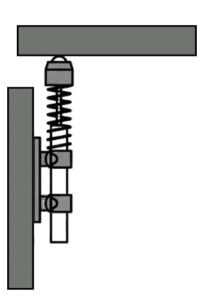
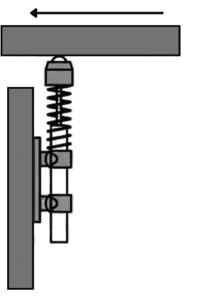
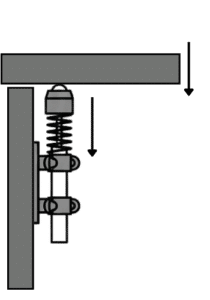
Some bridges, steel structures in particular, do not allow conventional drilling to install instruments. Our mechanical sensors (G1 family), digital sensors (E1 gauge with plates) and wireless sensors (R1, R2-P, R5) can all be bonded in place, which avoids damaging the structure and simplifies installation.

A reliable, simple and cost-effective solution for asset owners and consultants
- Products that are simple to install and suit every budget
From the mechanical crack monitor to the wireless gauge, including digital sensors, we offer a broad range of instruments suited to monitoring all types of structure. - Excellent cost-effectiveness
Made in France, our instruments are built to last while remaining affordable. Wireless sensors such as the R1 or the R2-P reduce the number of site visits required, delivering a rapid return on investment. - Reduced maintenance
Our sensors run autonomously for several years thanks to a long-life battery and a sealed enclosure. Mechanical gauges, for their part, require no maintenance at all. - A dedicated application for simplified monitoring
A dedicated application is supplied with all our measuring instruments (mechanical or wireless). It lets you visualise data, set up alerts, maintain long-term monitoring and export readings.
Bridge monitoring is a major issue for public safety and budget control. Saugnac solutions allow asset owners and engineering consultants to carry out this task with robust, reliable, cost-effective instruments that are easy to deploy.
Need advice on your project? Get in touch — we will help you identify the solution best suited to your constraints.