You want information for
R130 Gauge – Wireless deflection monitor
If you would like a quotation or have any questions about the product, please contact us:
- by email at info@saugnac-gauges.com
- by telephone on +33 9 62 07 18 68



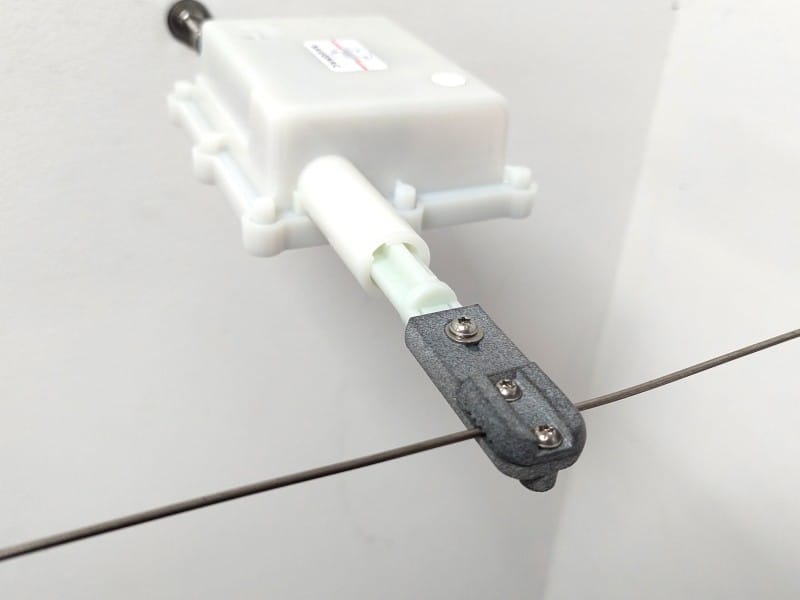
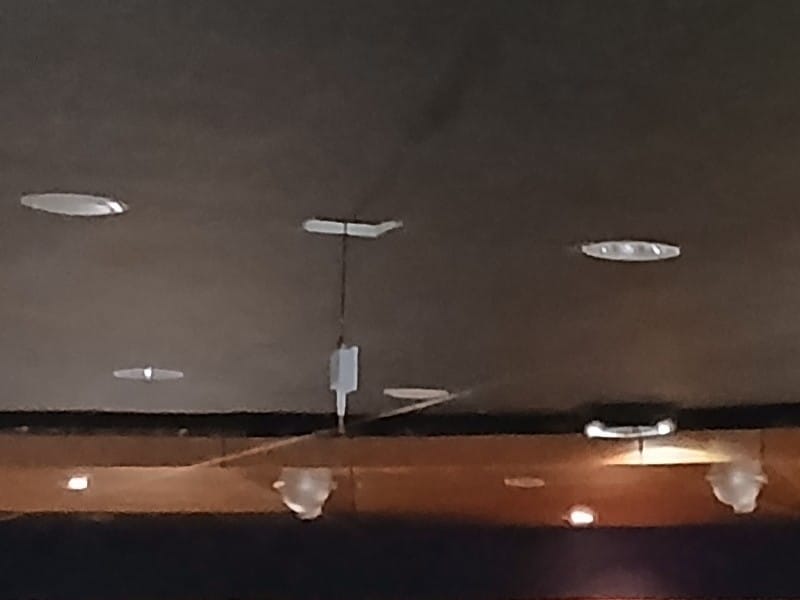
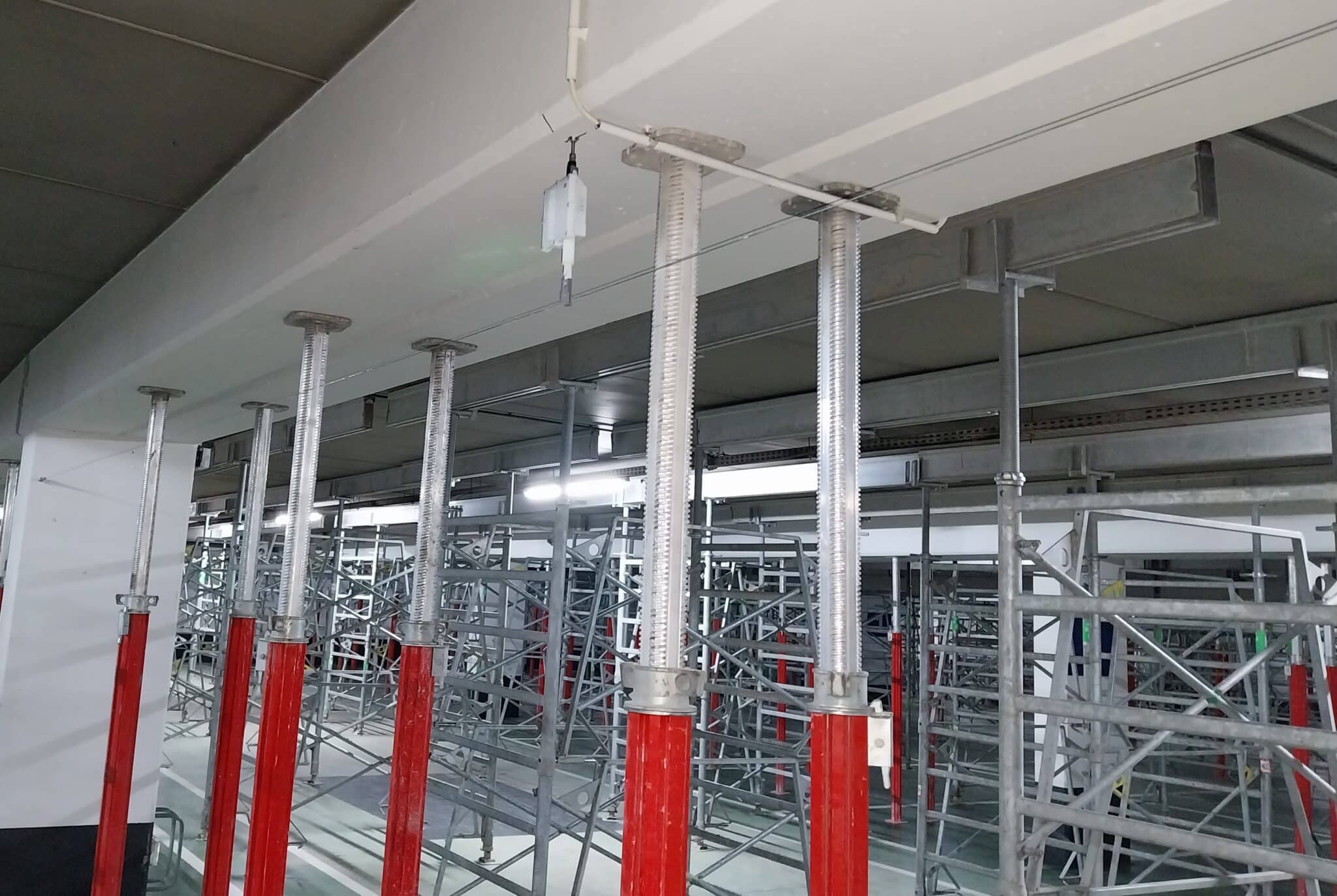
From €1,200 excl. VAT – For a study and a tailored quotation: contact us.

Technical specifications
|
Overview of the R130 gauge — monitoring deflection, tilting and deformationThe R130 builds on the robustness and operating principles of the G130 gauge, adding full connectivity for real-time remote monitoring. It measures the evolution of a deflection, with automatic data transmission through the saugnac.app application. Unlike a standard wireless crackmeter, which measures the opening of a crack between two closely spaced points, the R130 measures a deflection or a deformation over a span of 3 to 15 m using a metrological Invar cable, which makes it suitable for monitoring long spans: floors, beams, roof structures and civil engineering structures. The R130 gauge is built around:
Installation examples:
|
Applications and use casesThe R130 gauge is designed for remote structural monitoring in a wide range of contexts:
To monitor the opening of a crack rather than a deflection, the R1 wireless crackmeter remains the appropriate solution. |
Measurement monitoring with the Saugnac appAll the data collected by the 3 sensors is accessible in the Saugnac app https://saugnac.app from a PC or smartphone. The app is supplied with the R130 gauge and remains accessible even after the subscription for transmitting the gauge’s data has expired. This very simple app allows you in particular:
For a study and a tailored quotation: contact us. |
Frequently asked questionsHow can the deflection of a beam or a floor be measured remotely?The R130 gauge measures deflection continuously, using an Invar cable tensioned between two anchor points and a wireless linear sensor. The data is transmitted automatically over the LTE-M / NB-IoT network and can be consulted in the Saugnac app, with no site visit required to take the reading. What is the difference between the R130 and a wireless crackmeter?A wireless crackmeter such as the R1 gauge measures the opening of a crack between two closely spaced points. The R130 measures a deflection or a deformation over a span of 3 to 15 m, which makes it suitable for monitoring large structures: floors, beams, roof structures and civil engineering works. Does the R130 work in a basement or a cellar?The LTE-M / NB-IoT module offers better signal penetration than a conventional mobile network, which makes reception possible in a cellar, basement or car park depending on the site. A coverage check at the installation location is recommended beforehand. Over what distance can a deflection be monitored with the R130?The R130 covers a distance of 3 to 15 m between the two anchor points as standard. Beyond that, a preliminary analysis makes it possible to check the conditions and define a suitable solution. What is the battery life of the R130 gauge?Battery life is between 2 and 7 years, depending on the measurement and transmission frequency settings. |

Custom system for monitoring deflection. Resolution: 0.1 mm, corresponding to 0.2 mm of movement.
Read more